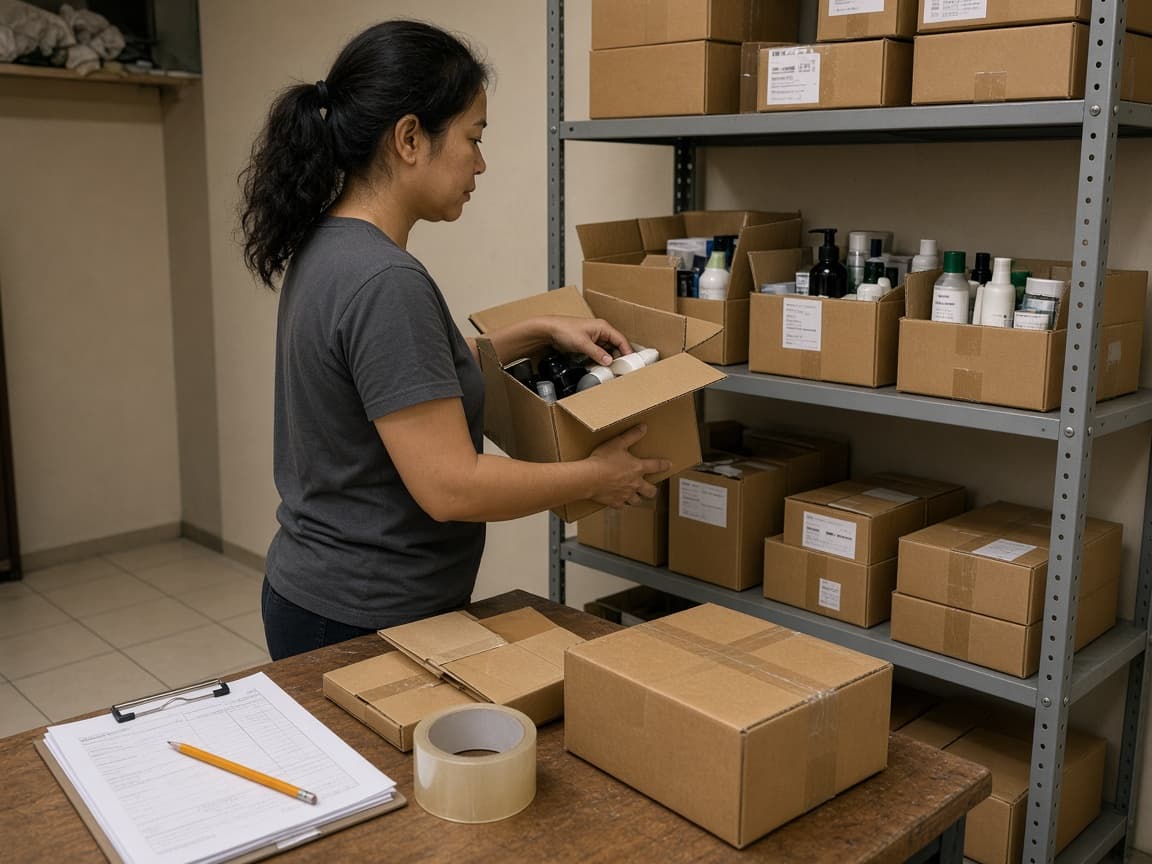
Marketplaces, chat, and the store can each show a different count. A sale has to reserve the unit or you oversell it.
One available count
Retail automation starts with one available count across marketplaces, chat, and the store. A sale on any channel reserves the unit. A mismatch waits in a queue for a person before another channel can sell it again.
Inputs: marketplace order, live sale, POS sale, chat order.
Outputs: reserved unit, buffer you choose, mismatch queue.
Human step: a person clears the queue before another channel sells the same unit.
Live selling
A live session sells the last unit while another channel still shows it in stock. The listing page and the live order fight over the same SKU. Order intake has to hold the other listing before packing starts.
Trigger: last unit sold on the live.
Draft: reserve against the live order and hold the other listing.
Staff sees: neither order is cancelled until a person decides.
Branch stock
A branch runs low on the stock sheet, and the reorder is a message someone has to remember. The warehouse may still hold cartons. Without a transfer task, the shelf stays empty while stock sits elsewhere.
Trigger: stock under the line you set on that branch.
Draft: transfer or purchase task for buying.
Staff sees: purchasing approves before stock moves.
Chat orders
A chat order arrives with a price question, an address, and a transfer-slip photo in the same thread. Packing waits on a manual check against the payment feed. A fake slip holds the parcel until a person releases it.
Trigger: price question, address, or slip photo in chat.
Draft: order from the live count, with the slip checked against the payment feed.
Staff sees: packing stays held when the slip and the feed disagree.
Parcel questions
Where is my parcel is answered by opening a different carrier tracking page each time. Customer support copies the status into chat by hand. A delay the tracking cannot explain waits for a person.
Trigger: where-is-my-parcel chat on a marketplace or inbox.
Draft: reply from the tracking you have connected.
Staff sees: anything the tracking does not explain waits for a person.
Listings
Listings are rewritten by hand when the same item goes on another marketplace channel. Titles and attributes differ by channel, and sometimes by language. A draft still needs someone on the team to publish it.
Trigger: new channel listing for a product you already described.
Draft: listing copy and attributes for that channel.
Staff sees: someone approves the listing before it is published.
Channel fees
Commission, campaign fees, and the payout do not match the price on the shelf. The weekly note that shows what a channel left you is still built in a spreadsheet. You check that note against the payout before you trust it.
Trigger: the weekly fee close for a channel.
Draft: net-after-fees note per channel and per item.
Staff sees: you check the note against the payout.
What shops usually automate first
The usual first jobs are inventory sync, order intake, and customer support drafts on the channels you already sell on. The checkout and the store system stay in place.
One available count
What gets in the way
Mega sale days and live sessions sell the same unit twice when each channel keeps its own number.
What runs
One count reserves a unit when an order lands, keeps a buffer you choose, and puts mismatches in a queue.
What stays with a person
A person clears the queue. We do not publish an oversell rate we have not measured on your channels.
Low stock by branch
What gets in the way
Each branch, and the warehouse, hits empty on a different day.
What runs
A line you set opens a reorder or a transfer suggestion, with a task for the person who buys.
What stays with a person
Purchasing approves it before it becomes an order.
Chat orders and payment slips
What gets in the way
Price questions, live-session orders, addresses, and transfer-slip photos arrive in the same chat.
What runs
With conversational AI in retail, answers use the live count, the order is drafted, and the slip is checked against the payment feed.
What stays with a person
A person releases packing when the slip and the feed do not agree. A fake slip is a hold, not a guess.
Where is my parcel
What gets in the way
Each parcel carrier has its own page, and the chat asks all day.
What runs
A reply drafts from the tracking you have connected, and a return follows the path you already use.
What stays with a person
Anything the tracking does not explain waits for a person. We do not claim a carrier integration you have not connected.
Listings
What gets in the way
The same item needs a title and attributes that differ by marketplace, and sometimes more than one language.
What runs
A draft is prepared from the product you already described, for the channel you are listing on.
What stays with a person
Someone approves the listing before it is published.
What a channel left you
What gets in the way
Commission, campaign fees, and the payout do not match the price on the shelf.
What runs
A weekly note shows what remained after the fees you record, per channel and per item.
What stays with a person
You check the note against the payout. It is not a set of figures we invented.
A chat, then a pack decision
The order is not packed because a model said the slip looked right. A check has to agree, or a person holds it.
Live selling
Last bottle sold on the live. Another marketplace still shows one.
Agent suggestion · awaiting approval
I reserved the unit against the live order and held the other listing for a person. I did not cancel either order.
Stock hold
Live
Sold
Other channel
Still showing one
Action
Reserved, listing held
Cancelled
No
Chat
Please confirm the serum, and ship it to the other city. The transfer slip is in the chat.
Agent suggestion · awaiting approval
The order is drafted and the address is on it. The slip does not match a payment in the feed yet, so packing stays held.
Order held
Item
Serum
Ship to
Another city
Slip
Does not match the feed
Pack
Held
Marketplace chat
Ordered three days ago. Where is it?
Agent suggestion · awaiting approval
The tracking we have says it is with the carrier and has not been delivered. I drafted that reply. I did not invent a delivery time.
Tracking reply
Age
Three days
Status
With the carrier
Delivery time
Not invented
Sent
Draft only
Stock watch
The other branch is under the line you set on this item. The warehouse still has cartons.
Agent suggestion · awaiting approval
I drafted a transfer from the warehouse to that branch. Buying approves it before anyone moves stock.
Transfer suggestion
Branch
Other branch
Warehouse
Has cartons
Task
Transfer, not a purchase
Approved
No
How it fits into existing systems
An agent does not act outside the rules you set. Internal reading can run alone. A customer message or a payment waits for one click. A script, not the model, checks the math.
Level 1
Acts on its own
Internal reading only. The agent can read a document, parse it, and check stock or a record without changing it. Nothing is sent to a customer, and nothing moves money.
Level 2
Waits for a person's approval
A customer-facing message, and anything that moves money, waits for one click in team chat or in the ERP. The agent prepares the draft. A person approves it before it is sent or posted.
Level 3
A script checks the numbers
A deterministic script, not the model, verifies the math. It checks tax calculations, invoice totals, payment slips, and date formats against the rules of the business. If a check fails, a person gets the case.
Personal data stays in the tools you already use. The agent writes a log of what it read and what it changed. We can sign an NDA before reviewing any workflows or data.
Systems we already run
Order intake and the article drafts are patterns we run ourselves. Pointed at a shop, the same shape fits a chat order and a listing. We do not claim a store already uses them.
Lead sourcing, qualifying, and contacting
Finding buyers by hand does not keep up. Someone has to search, judge who is worth a note, and send the first message.
What runs
A system we built for N2o sources leads, qualifies them, and sends the first contact.
What a person still does
A person reviews the outreach messages before pressing send, and reads the replies to take the conversations worth a meeting.
Built to handle 200+ leads a day.
The lead list N2o runs for itself.
LinkedIn posts, drafted from live sources
Posting on a schedule means someone has to watch the field, notice what changed, and write.
What runs
An automation checks a set of sources, studies the trends, and proposes LinkedIn posts that are ready to publish.
What a person still does
A person reviews and edits the draft before posting it. Nobody posts blind, and nothing goes out on its own.
Drafts N2o prepares before anyone posts.
Blog articles, from the same pipeline
A longer article needs the same research, and it stalls when nobody has a free afternoon.
What runs
The same kind of automation checks sources, studies the trends, and proposes article drafts.
What a person still does
A person edits the draft and publishes it. The draft is not the finished article.
The article pipeline for the N2o blog.
Automated order intake
Orders arrive as chat messages, emails, PDFs, and notes that were never meant to look official.
What runs
The intake reads the request, holds anything unclear, and creates a quotation or sales order in the system the team already uses.
What a person still does
A person handles missing quantities, unknown parts, and unusual commercial terms.
More than one way to build it, when both are honest
A written list of what not to automate
Tasks where the return is negative or not measurable
The example fee is credited if you proceed to a build
Questions from shops and online sellers
Which retail tasks make sense to automate first across chat, marketplaces, and a physical store?
The first retail automation is usually the stock count, so a sale in chat, on a marketplace, or in the store reserves the same unit. Chat orders, parcel questions, and listing drafts come after that, once the count is one number. A person still clears mismatches.
Will this stop overselling on a mega sale or a live session?
It can, if every channel you sell on reserves from the same available count, with a buffer you choose. A mismatch waits in a queue for a person. We will not quote an oversell rate before we have seen your channels.
Which marketplaces can connect?
The marketplaces, chat, and the store you already sell on. A channel is connected when you can give us access. We do not list a marketplace as done before that access exists.
How are transfer slips checked?
A deterministic script reads the slip, compares it with the payment feed, and checks the amount, including tax where that applies. If they disagree, packing stays held for a person. The model does not decide that a suspicious slip is real.
Can it answer where is my parcel?
It can draft a reply from tracking you have connected, including the parcel carriers you already use. If the tracking does not explain the delay, a person answers.
Do listings publish themselves?
No. A draft can be prepared from the product you already described. English is preferred. We can also work in French, and we can arrange Thai speakers if really required. Someone on your team publishes it.
Where does order data sit?
In the shop tools and channels you already use. Access and personal-data rules are agreed before the build. We do not start by copying customers into a separate product. We can sign an NDA before reviewing any workflows or data.
Which languages do you work in?
English is preferred. We can also work in French, and we can arrange Thai speakers if really required. A person still checks anything that goes to a customer.
How long until something is running?
Most workflows are running in 2 to 4 weeks. The exact timing depends on the size of the company and the size of the task.
Is the call free, and how is a workflow priced?
The call is a free 30-min Workflow ROI Blueprint for one repeated job. The AI audit and roadmap is a separate paid service. An informational example for one automated workflow is $2,000 to $5,000+ per workflow. It varies by workflow complexity and the systems it touches. Training is $1,000 to $2,500, varying by team size and number of sessions. An AI audit and roadmap is $750 to $1,500, varying by company size and number of teams, and that fee is credited if you proceed to a build. Prices shown on this site are informational examples only and will differ from project to project. At handover you own the code, the prompts, and the accounts, with no vendor lock-in. Optional monthly care covers drift when document layouts, supplier formats, or APIs change.
Book a call for a free 30-min Workflow ROI Blueprint
Bring the repetitive task that costs your team the most hours every week.
Email or call. A person reads every note and says whether that work is worth automating.